Subtotal $0.00
Introduction
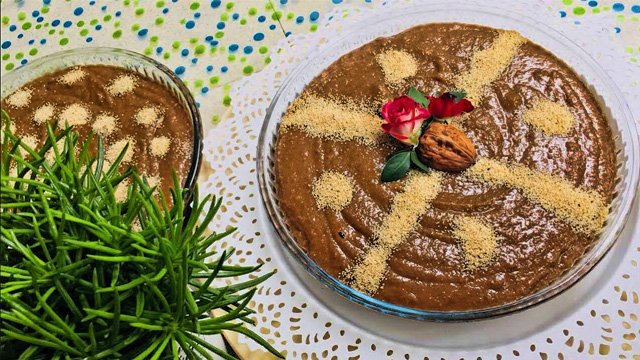
Samanu, also called Samanak, Sumanak, or Sumalak in different regions, is one of the oldest and most respected traditional foods in Central and Western Asia. It is a thick, dark-brown sweet paste made mainly from sprouted wheat and flour. Unlike many desserts, samanu contains no refined sugar. Its sweetness develops naturally during the sprouting process. For many centuries, this food has been connected with spring, new life, hope, and family celebrations. In countries such as Afghanistan, Iran, Tajikistan, and Uzbekistan, samanu is much more than a sweet dish. It is part of cultural identity, family memory, and seasonal tradition. For many people, the smell and taste of samanu immediately bring memories of childhood, home, and the joyful days before spring.
Historical Background
The history of samanu goes back many centuries, perhaps even thousands of years. It probably began in ancient farming societies where wheat was one of the most important crops. Wheat was valuable because it gave people daily food and represented survival. Long ago, people noticed that wheat became naturally sweet when it started to sprout. This simple observation slowly became the beginning of a unique food tradition.
Ancient people understood nature through daily life. They saw that dry wheat grains, when given water and time, came alive and changed. This transformation was important. Instead of only eating the sprouted grains, people discovered that the sweet liquid from them could be cooked for many hours to make a thick and nourishing paste. Over time, this process became more than a way to make food. It became a tradition that was passed from one generation to another.
As societies changed, many old customs disappeared, but samanu remained. It survived because it was connected to farming, spring, family, and celebration. Even today, when people prepare samanu, they are continuing a tradition that links them to their ancestors.
Connection with Nowruz
Samanu is strongly connected with Nowruz, the traditional new year celebrated in many countries. Nowruz marks the arrival of spring and the beginning of a new year. It is a time of renewal, fresh beginnings, and hope for the future.
Samanu fits perfectly into this meaning because it begins with wheat grains that appear dry and lifeless but become green and full of life after sprouting. This natural change makes samanu a symbol of rebirth and abundance. For many families, preparing samanu before Nowruz is a way of welcoming the new year with positive wishes.
People often prepare samanu with prayers for health, happiness, peace, and prosperity. In some homes, samanu is placed on the festive table as a symbol of blessing. Children grow up seeing it every spring, and over time it becomes part of family memory. For many people, Nowruz without samanu feels incomplete.
Natural Sweetness and Scientific Explanation
One of the most interesting things about samanu is that no sugar is added, yet it tastes naturally sweet. This sweetness comes from a natural scientific process.
When wheat begins to sprout, enzymes inside the grain become active. These enzymes break down starch into simpler sugars. One of these sugars is maltose. During cooking, these natural sugars become concentrated, and this gives samanu its special sweet taste.
This process is important because it shows how nature itself creates flavor. The sweetness of samanu is different from the sweetness of candy or cakes. It feels softer, deeper, and more natural. Many people say the taste of samanu is earthy, warm, and comforting.
Traditional Preparation Process
Making samanu takes several days and requires patience. The process begins with choosing good-quality wheat grains. The wheat is washed carefully to remove dust and dirt. After that, the grains are soaked in water for one to three days.
During soaking, the grains absorb water and begin the early stage of germination. Then the water is removed, and the grains are spread in a tray or wrapped in a clean cloth. They are kept moist for several days. Slowly, small white or pale green sprouts appear.
These sprouts are very important because they contain the natural sweetness. If the sprouts grow too long, the taste may change, so people usually use them while they are still fresh and short.
After sprouting, the wheat is crushed, ground, or blended. Water is mixed with the crushed sprouts, and then the liquid is pressed out. This process may be repeated several times to get as much sweet liquid as possible.
The sweet liquid is then mixed with flour until it becomes smooth. This part is done carefully because lumps can affect the final texture. A smooth mixture makes the finished samanu soft and even.
The next stage is cooking. The mixture is poured into a large heavy pot and placed over low heat. It must be stirred again and again for many hours. This is the hardest part. If the mixture is not stirred, it can stick to the bottom and burn.
As time passes, the mixture slowly thickens. Its color changes from pale beige to golden brown and then to dark brown. The smell becomes richer, warmer, and sweeter. In many traditional homes, cooking can continue for eight, ten, or even twelve hours.
After long cooking, some families cover the pot and leave it for several hours. By the next day, the flavor often becomes deeper and smoother.
Communal Tradition and Social Gathering
In many places, especially in Afghanistan, making samanu is not only cooking. It is also a social gathering. Family members, neighbors, and friends gather around the pot, often at night.
They take turns stirring the mixture because it is too tiring for one person alone. During these hours, people talk, laugh, sing songs, tell stories, and drink tea. This turns the long cooking process into a joyful celebration.
In Afghanistan, samanak is especially connected with women’s gatherings before Nowruz. Mothers, daughters, sisters, and friends may spend the whole night together. The well-known line “Samanak dar josh, ma kafcha zanem” expresses the happiness of this moment.
This tradition is important because it brings people closer. Older women teach younger girls how to make samanu. In this way, cooking becomes a way of passing down knowledge, culture, and memory.
Stones and Symbolic Meaning
A small but interesting tradition is putting clean stones or walnuts into the cooking pot. There are practical reasons for this. The movement of the stones while stirring may help prevent the mixture from sticking too much.
There is also symbolic meaning. In some families, finding a stone in your serving is believed to bring luck, blessing, or a fulfilled wish in the new year. Even though this is a small detail, it makes the tradition more special and memorable.
Regional Variations
Samanu is known by different names and has small differences in preparation from one region to another.
In Afghanistan, it is called samanak and is strongly linked with Nowruz songs and women’s gatherings. In Iran, it is called samanu and often appears on the traditional Haft-Seen table. In Uzbekistan and Tajikistan, it is called sumalak and is often made in large amounts for communities.
Some families prefer thick samanu, while others like it softer. Some cook it longer for a darker color. Others use slightly different amounts of flour or water. Even though the details may change, the main idea remains the same everywhere.
These regional differences show how one traditional food can belong to many cultures while keeping local identity.
Nutritional Value
Samanu is not only meaningful but also nourishing. Since it is made mainly from wheat, it contains natural carbohydrates that provide energy.
Wheat also contains small amounts of important minerals such as iron, magnesium, and zinc. Sprouting may make some nutrients easier for the body to absorb.
Because samanu contains no refined sugar, many people see it as a more natural sweet food than many modern desserts. However, it is still rich and filling, so it is usually eaten in small portions.
In the past, foods like samanu were valued not only for taste but also because they gave strength during seasonal changes.
Symbolism Beyond Food
Samanu has meaning far beyond taste. It represents transformation because dry hard grains become soft and sweet food. It represents patience because it cannot be prepared quickly. It represents hope because sprouting wheat is a clear sign of new life.
It also represents continuity. Families make samanu every year, and children learn from parents and grandparents. This keeps the tradition alive.
For many people, samanu teaches an important lesson: good things often need time, care, and shared effort.
Samanu in Modern Life
Modern life has changed many traditional habits. Today many people buy ready-made samanu from markets instead of making it at home. Machines can make some parts easier, and busy city life often leaves less time for long cooking traditions.
Even so, samanu remains very important. Around Nowruz, many families still try to prepare it in the traditional way. Even when it is bought from a shop, it still carries emotional meaning.
For people living far from home, samanu can feel even more special. Afghan, Iranian, Tajik, and Uzbek families living abroad often prepare or share samanu to keep their culture alive. The taste can remind them of spring mornings, family gatherings, childhood memories, and home.
Conclusion
Samanu is much more than a sweet dish. It is the result of ancient farming knowledge, natural biological change, and centuries of cultural tradition.
It is made from simple ingredients—wheat, water, flour, patience, and shared effort—but it carries deep meaning. It speaks of renewal, abundance, endurance, and community.
Across generations and across borders, samanu remains a strong symbol of spring and togetherness. Eating samanu is not only enjoying a sweet food. It is also sharing a living tradition that has connected people for centuries and continues to bring families and communities together every year.
Comments are closed